Sunday, March 3, 2013

Oman funding its private sector

I just read this article on the Times of Oman website and it reminded me of the attempts of "Arabization" that GCC governments have repeatedly attempted. The article explains how Oman Liquid Natural Gas is funding Nizwa College of Technology to establish a science lab for oil and  gas. There would also be funding for new equipment and a fishing vessel at the Fisherman's Training Institute in Salalah. Both industries have been dominated by expatriate workers and foreign companies. Hopefully the training of Omani youth will not only "Arabize" these industries, but provide jobs in the private sector for the large youth population.

http://cdn-wac.emirates247.com/polopoly_fs/1.287067.1283512141!/image/1825878611.gif

Wednesday, February 13, 2013

Busy!

Looks like another new post about the Middle East/North Africa will have to wait a little bit. However I do have some new topics to talk about such as the British Mesopotamia Campaign from 1914-1918. I love it when my WWI history course collides with my major.

I had to place the next Moro War post on the back burner thanks to this extra busy semester. I need to read All Quiet on the Western Front again for one course and a book about the 1973 Arab-Israeli war (woohoo the Arab-Israeli conflict, my favorite topic, not). All I got to say is that I wish I was having as much fun as these guys: 

http://www.carhubnews.com/wp-content/uploads/2011/09/dubai7.jpg


Monday, January 14, 2013

Getting back into the swing of things

Wow its been a while since I last posted! I've spent much of break doing non-school related stuff and catching up with friends and family. Right before break I checked out a lot of books related to Oman, the UAE, the Arab Legion and British military involvement in the Middle East. I'll be honest, I haven't researched or read as much as I wanted. In fact I'm reading about book right now about the Moro war in the Philippines in an attempt to see how the US handled a Muslim insurgency over a hundred of years ago. I've also been doing some reading about the British in Sudan. Usually my interest in certain conflicts comes from seeing or shooting certain firearms. I have a great interest in the British Martini Henry rifles and early Enfield SMLE's since they have been used by a majority of Arab armies since the 19th century. The proliferation of those weapons aided fighters in many conflicts since the British left their old domains in the region. 

Anyway, the book about the Moro war is interesting. It's really the first foreign conflict with a large drawn out insurgency. The conflict is what I call an intermediate conflict because it took place between two other conflicts that had doctrine bleed over. What I mean by this is that the US military doctrine first used in the Moro conflict was left over from the Indian Wars. However the military leaders soon found out that killing everyone really didn't work like it did in the Western US.  Many famous US Army officers,such as General Pershing, cut their teeth in the Philippines and would use their experience to change Army doctrine in time for World War One. The Moro conflict also took place during a time when the US military was developing its technology. Obsolete rifles like the 1898 Krag would be replaced by the much more reliable and powerful 1903 Springfield while machine guns started to be more reliable and faster firing. Artillery increased in power and range while the US Navy grew as well. Although those two changes might seem small they can make a huge difference in battlefield tactics, especially in a place like the Philippines where the Navy, Army, and Marines worked hand in hand. 

Pershing talking to tribal elders
http://www.morolandhistory.com/09.PG-Camp%20Vicars/camp_vicars_p4.htm

high casualties resulted in battles between sword wielding fighters and their rifle and machine gun armed enemies
http://en.wikipedia.org/wiki/Moro_Rebellion

Pershing and other US army officers meet with Moro Elders
http://www.morolandhistory.com/09.PG-Camp%20Vicars/camp_vicars_p4.htm

I decided to read this book because situations where a colonial power dealt with an insurgency after asserting control over a territory happened previously with the British in Egypt and Sudan, not to mention the other conflicts in Africa like Boer War and the Zulu wars preceding it. I also wanted to gain some knowledge of how the US handled this insurgency and then look at how we have handled Iraq and Afghanistan. I know no two conflicts are alike and that the people, culture, and history of the places fought in is different but I want to focus on the attitudes of the military leaders and how it affected decision making. I believe the approach of leaders and their doctrines in these conflicts and use of the resources at hand are the major differences. 

Tuesday, December 11, 2012

Im going to keep on blogging and you can't stop me!

 I decided to keep the blog going since I'll be doing some reading about the Gulf, military involvement and continuing studying Arabic. I'll write a final post for my class after finals are over.

For all of you who studied Arabic and somehow ended up in Jordan you will understand:
http://www.youtube.com/watch?v=7fZjhmEzonc


Sunday, December 9, 2012

Ship building in the Gulf

In addition to my Middle East politics course I undertook my first independent study class for Arabic this semester. One of the things I worked on during the second half of the semester was a translation of a Bahrani text on ship building. Although these historical ships have mostly been replaced by the huge tankers and freighters they are still used locally by fishermen and for taking tourists on rides. This was my first attempt at doing any formal translating.

Here are some pieces of the project:


The island of Bahrain continued to play an outstanding role in navigation in the Persian Gulf during the era of the Islamic state. Bahrain has had a long experience ship and boat manufacturing and the skill at riding the sea and knowledge of astronomical information spread with Muslims departing from the coast of Bahrain toward India, Persia, and elsewhere during Islamic conquest. 
In the middle ages, Bahrain played a distinctive role in the Gulf by trading with the Middle and Far East. The main staples of trade they specialized in were silks, spices, perfumes, incense and precious goods sent to ports in the vast parts of the Islamic world. 
Bahrain was famous in the middle ages for exporting dates, Arabian horses, and natural pearls to India and China. Bahrain was also the center of pearl and oyster diving in the Gulf. The inhabitants have traditionally been known throughout history as artisans for ship manufacturing and transoceanic sailing to the south but also as makers of ropes and sails and the dried fish and pearl trade. 

Types of ships:

Al Ghanjah: A large type of ship that is very similar to what al danqah and al bateel is like in the bow and has a stern like al danqah. It has inscriptions on it and it was used to transport goods on long distance voyages. 

http://up.arab-x.com/July11/WMI80840.png

Shwayee: The Shwayee is a small boat used for pearl diving and for fishing in the regional ports as well as transporting goods at port. It is still used in the southern Gulf. The Shwayee is like the Sanbouk where it wings out in the rear and has oars but it is smaller than Sanbouk. 

http://www.q8ow.com/up/uploads/1b66222884.jpg

Al Bateel: The Bateel is characterized by its enormous size and top speed. It is mostly used for long distance voyages to Indian ports and for transporting goods and passengers, as well as things associated with diving because of its high speeds. It is distinguished by a bow that is bent and a sloped stern that has oars. 
http://farm8.staticflickr.com/7014/6532667045_e27047874b_z.jpg

Al Boom: This is one type of the larger traditional vessels and is distinguished by a bow and stern that is similar in shape. Its size depends on a large straight plank that acts like a keel. Its size can reach to be more than 90 meters. It is usually used for long distant voyages across the ocean and transporting passengers and goods. Al boom have a low main deck and a short raised deck at the rear. The front of the keel beam is curved and protrudes out front of the ship while the tip is painted black with a white stripe. 
http://farm1.static.flickr.com/120/288932768_87b89f8c45.jpg


Thursday, December 6, 2012

Wait, we have to work?

http://www.economist.com/news/middle-east-and-africa/21567128-recent-government-efforts-create-jobs-may-store-up-trouble-future-where

This past summer I read Sean Foley's The Arab Gulf States: Beyond Oil and Islam,which I recommend to anyone pursuing work/study/vacation in the Gulf region. He dedicates a chapter to the role of women in his book and talks about the expat workforce throughout his historical narrative of the Gulf. One he makes clear: a majority of native Gulf Arab men don't want to work in the private sector and women don't have the opportunity to have professional jobs Instead a large portion of private sector work is filled up by expatriate laborers from India, Pakistan, the Philippines, and Indonesia.  Walk down the streets of Dubai and I bet you will be able to count the number of Arab Emiraties with one hand. I believe Foley even said the amount of expats in the Gulf numbers over 3 million, which is larger than the native Arab populations of the UAE and Oman.

http://www.arabianbusiness.com/incoming/article400655.ece/ALTERNATES/g3l/57238715.jpg


According to Foley most Gulf Arabs would rather work for the government while women are not socially expected to work outside the home. He writes about the problem that Gulf Arab youth aren't qualified enough, take their education seriously enough, nor want to work to start a career in the private sector. The high managerial positions along with the lower paying positions in the private sectors are left for expats. This proves to be a huge problem for the governments of the Gulf States. The reliance on foreigners to build infrastructure means large populations of expats. These populations have already shown their influence in the UAE in the past decade when expatriate workers protested low wages and mistreatment. Protests like this left stores and businesses closed. Their actions also sent a message to the government that maybe native citizens need to take up more jobs. As a result of their protests expat labor is more expensive and now host governments have to acknowledge more expat rights and provide more benefits to them than in previous decades.

The article I posted from foreign policy talks about problem with employing Emiratie youth. The reason I focus on the UAE is because the expat population is so large. This Link from 2011 reported that expats were close to 90% of the population in the UAE. Finding employment for Emiratie youth is exceedingly difficult with such a large expat population. However another problem is that most youth don't need to work. The rentier state is to blame. In the Foreign Policy article it stated that per capita GDP was near $90,000, right behind Qatar's $94,000. Government handouts and subsidies are so great that Emiratie youth don't have any incentive to work a low paying job in the private sector.

Since the 1970's the Gulf States have attempted to "Arabize" the private sector with pressuring businesses to hire local Arab nationals instead of expatriates. So far those efforts have failed and become worse. Dubai again is a prime example being that it's huge skyscrapers and downright amazing building feats were built by expat labor and continues to be. Government's haven't been able to attract their Arab citizens to do the low paying jobs and qualified professionals are hard to come by. So what is the solution if male Arab youth aren't qualified or don't want to work? Foley and I share the same opinion: let women who are qualified and want to work have the opportunity to do so. Him and I aren't talking about construction work, we are talking about the professions requiring higher education.

He wrote in his book about how Gulf Arab women are more educated and qualified than there male peers. The only problem is that society puts such harsh sanctions against them getting full time professional jobs. I have heard from multiple Arabs in the Gulf how women have better grades in high school, attend college and out perform the males peers. The problem is that once they graduate from college they go on to get married, have kids, and stay at home raising them. I'm not against parenthood or marriage but in the case of the Gulf any aspirations for a  women to get professional career after graduation are severely looked down upon. I really think the employment of women could be a huge boon to the "Arabization" of the private sector.


This problem of employment is only going to get worse as oil runs out and Gulf States can't provide the same amount of subsidies as they have done in the past. Men are going to have to work the hard jobs and earn their money. The other problem is what jobs are going to be available as the youth populations grow? Although the Foreign Policy article explained the UAE had quickly made jobs for their citizens it will only be more difficult to do in the coming years.

http://www.oxfamblogs.org/fp2p/wp-content/uploads/DubaiLaborers.jpg


Sunday, December 2, 2012

Its all about who you know

http://www.al-monitor.com/pulse/originals/2012/al-monitor/reversebraindrain.html

One of my long term goals after college is to do some sort of business in the Persian Gulf region. I recently read the article above from al-monitor on reversing brain drain in the Middle East. What really interested me was the last section about public policy. This part of the article quickly goes over the problems that small business owners face when starting up. Lack of clear regulations and the necessary resources for a successful business hinder entrepreneurs and business owners. I find it particularly disheartening as an American because as a student looking to do some sort of business in the region the challenges make me consider whether attempting my goal is worth it or not.

https://blogger.googleusercontent.com/img/b/R29vZ2xl/AVvXsEgXx353itgRAI0lWjz9E6KXtTu61N4cPkfDZQ2DXsOnFnJmTziLBqmdwepx4vgCJK6sOYb542CBQ84qsNFT2dSaqb80Hp-fXfcfUNSWKxpVnBDHyrjiqW2qM2YnD27o1bwU5hQE_9sLIq8/s320/Amman+088.jpg


However, the one thing this article made me think of is the unofficial system of knowing people who can give you favors works in the Middle East. I really don't know what to call it but the system of "wasta" in Oman is what I am thinking of. "Wasta" from my own experience was more than just knowing the right people, having it meant you could use the power of knowing someone to get things done and skip the standard procedures. I personally saw this system play out multiple times during my travels and have also read about it in books on the bureaucracy of the Saudi regime.

Say for example you have a document that needs an important signature from a judge but there is a long wait and process the document has to go through before it is signed. If you know someone who works with the judge you can call this person and they can skip the regular procedures and process the document within the same day. Stories similar to this have been told to me from friends who needed documents from their home country to travel or study abroad.

Going back to the section in the article on public policy I can easily see how this corruption of the system is a drawback to people looking to work in the Middle East or return to their home countries to work. Plus the horribly unclear regulations and standards that are required for business owners doesn't make finding work in the region appealing. This poses a significant problem if the article is right about the Arab world needing 100 million more jobs in order to employ the newer generations.

http://cache.virtualtourist.com/4/4192962-Busy_street_scene_Dubai.jpg


Monday, November 26, 2012

The British way

In the past 11 years the United States has occupied and undertaken nation building efforts in Iraq and Afghanistan. This included the formation and training of local military forces. The training efforts undertaken by the US to reform the Iraqi military and create the National Afghan Army may be the largest operation of its kind in US history. Our nation building attempts also rank up there in US history.  However, the US isn't the first nation to undertake such operations in the Middle East during the 20th century. Actually the British attempted nation building in Iraq and Jordan and also undertook programs to create and train local military groups around the Persian Gulf. 

I think there are some interesting lessons to be learned given the circumstances at the time the British carried out these operations. I'm going to have to take a closer look because the information is limited. I've been interested in the British involvement in the Trucial States, Oman, and Trans Jordan but there is much more to uncover in these countries and in Yemen and Iraq. 

Chris don't worry about reading the two paragraphs above just look at these:


Sunday, November 25, 2012

Are missiles the answer for GCC security?

http://www.aljazeera.com/news/middleeast/2012/11/2012117112056212762.html

Last Saturday I read this article and thought this is a perfect example of the GCC really fails at collective security. The article talks about how the UAE and Qatar are seeking to buy $7.2 billion worth of Missile Defense systems from the US company Lockheed Martin Corporation. The system is called the THAAD (Terminal High Altitude Aerial Defense) and incorporates mobile firing systems and radar. It goes on to talk about how the US deals with each GCC state on its own in building up defense capabilities.

My research paper for this class is about how political elitism has caused the GCC states to become irrational actors during attempts at collective security. Although the article doesn't mention political elites it does talk about US-Qatari and US-Emirati relations.

Notice how the article talks about the GCC states, led by Saudi Arabia, expressing interest in developing their security capabilities but the US only deals with the GCC on a state by state basis. My paper points to the lack of unified security efforts as a reason for the GCC's inability to really provide a security force for the entire council. The arms deal hasn't been completed yet but the way it is being done is what needs to be looked at. History has shown that the Peninsula Shield Force, the GCC collective security force, has not been effective and that the member states rely on the US for support against a strong Iran.

In my opinion this arms deal shows how specific interstate politics undermines GCC security efforts. Qatar and Iran share natural gas fields and have a different relationship than other states. The UAE and Iran have been at odds over territorial claims since its independence in 1971. The UAE and Qatar lack large armed forces and naval capabilities so bolstering missile defense seems like a rational way to compensate for weaknesses. However according to this article other member states's military capabilities have not been considered in order to purchase arms for the collective good of the GCC.


How the THAAD rocket system can be used to intercept missiles. Notice it eliminates the need for other equipment. This might be the most cost effective route for the Emirates and Qatar, but what about the other Gulf States and their missile defense capabilities?

THAAD rocket being fired from mobile launcher

سلاح ابيض "White weapons"

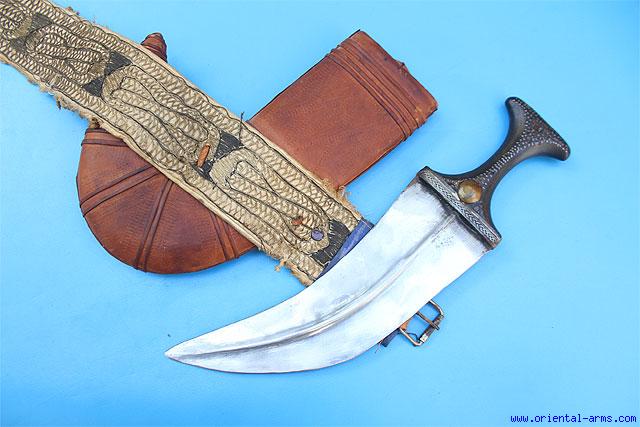
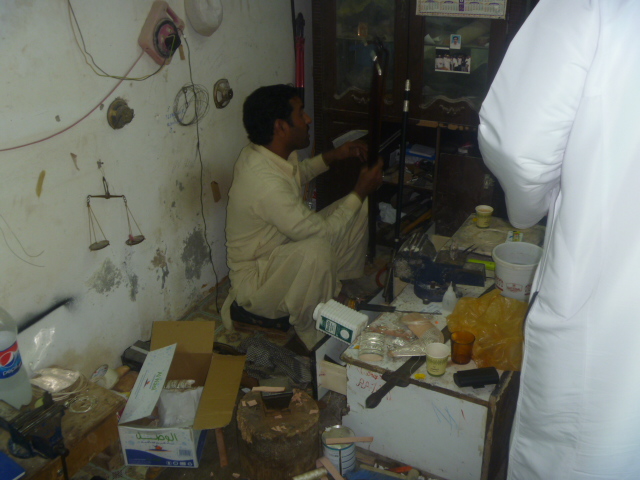
Ever since I posted the "guns are fun" post I've been thinking a lot about what I saw on my trips to the Middle East. Before firearms made it into the hands of the people Middle East the main weapons were the traditional swords, daggers, and knives. Although dated, the culture of the Gulf still retains the carrying of the traditional knives for symbolic purposes. It is particularly strong in the UAE, Oman, Yemen, and southern Saudi Arabia. The Khanjar (dagger in Arabic) or Jambiya (Yemeni colloquial for their style of dagger) are still hand made and worn by men. This tradition has been challenged by globalization but still retains a distinct identity marker for special occasions like weddings, eid's, national holidays, ect.

Every dagger is different and their design can give away what region they were from/who would have worn it. The daggers reflect the lifestyle of the wearer in some cases. I am also doing a translation piece for my Arabic class on ship building and turns out that their are special types of daggers used by sailors and fishermen.

The following pictures are all off the internet but I will describe their significance.

http://www.posterlounge.co.uk/traditional-khanjar-dagger-strapped-to-waist-of-omani-man-pr76327.html

This is the typical contemporary use of the traditional daggers in the Arabian Peninsula. Above is an Omani man dressed up for a celebration. Notice he has three weapons, his dagger (khanjar in Arabic), sword, and pistol. In his other hand he should be carrying the rawhide shield. Celebrations and dances called Aazis incorporate all these items.

Below is a group of Yemeni men wearing their daggers, locally called the jambiya. Notice the plain design and the shape of the belt and scabbard.
http://www.google.com/imgres?hl=en&safe=off&sa=X&tbo=d&biw=1366&bih=600&tbm=isch&tbnid=vC6MtFSC5F6BRM:&imgrefurl=http://pictures.traveladventures.org/images/yemenipeople02&docid=6hqB32fMPnEzeM&imgurl=http://www.traveladventures.org/continents/asia/images/yemenipeople02.jpg&w=500&h=375&ei=A8OyUKacDc6_0QHe24GgCg&zoom=1&iact=rc&dur=328&sig=114300205124519470858&page=1&tbnh=130&tbnw=163&start=0&ndsp=21&ved=1t:429,r:7,s:0,i:123&tx=36&ty=81


Here you can see the daggers being worn in the late 1940's by British Explorer Wilfred Thesiger and his bedouin accomplices. Up until the modernization of the Gulf in the 1970's the daggers still played an essential part of daily life being used as a tool. Wilfred Thesiger wrote specifically about the usage of the daggers he and his friends wore in his book "Crossing the Sands". 

Types of daggers:


This is a typical example of the dagger made and carried in Oman and the UAE. I've also seen members of the royal families in Jordan, Bahrain, Saudi Arabia carry them for ceremonial purposes.


This picture shows how the daggers are designed for specific purposes. According to an online Omani source the smaller dagger (top) would be used by fisherman because they are easier to wear and work while on a ship. The larger dagger (bottom) is the regular size that would be used by people inland. 
Oman is unique because it has an official style of dagger known as the Saidi style. According to what I have been told by Omani's and what I have read this design was created by the wife of the Omani Sultan in the mid 19th century using Indian designs for the handle. The one I have pictured here has the Saidi style handle with a ton of silver filigree over the rhino horn handle. Oman and Yemen are also interesting because tribes have distinct dagger styles. The Saidi tribe is the Sultans tribe and would have daggers like the one above while other tribes will have more rings added to the scabbard. 


Outside of Oman the size, shape, and design of the daggers change. These two daggers show features that give away their origin. These daggers are from the Asir region of southern Saudi Arabia that borders Yemen. The upward point of the scabbard, belt design, and the cast silver parts are the key differences.


Here is a typical Yemeni Jambiya. Notice the belt, the design of the scabbard, and the wide blade. Yemeni knives can be huge and although they aren't decorated with silver like other types of daggers the handle is the most important part. A true Yemeni jambiya worn by a person of importance would have a rhino horn or other rare horn handle. 


This style of dagger is from the southern region of Oman along the Yemeni border. Notice how silver is used and the size of the blade. 


Like the previous dagger this is a typical design found in the southern region of Yemen and into southern Oman. There is more silver work than the other Yemeni jambiyas and the scabbard doesnt point up but the belt is the same wide style and the handle is the same. 

I find all this interesting because the daggers tell much more than one realizes. There isn't a lot of research on traditional daggers but from talking to my friends and searching around on google I have learn to tell where people are from/what they do from the blades they carry. 

Of course each dagger is handmade and one of a kind. 


http://www.vikingsword.com/vb/showthread.php?t=14878&highlight=omani+scabbard

http://www.oriental-arms.co.il/


Tuesday, October 30, 2012

Ideas of a Gulf Union

This past week Professor Webb brought to my attention a great article from online news website www.al-monitor.com about the GCC's inability to successfully play a role as a collective security institution.

http://www.al-monitor.com/pulse/security/01/03/gulf-union-is-the-solution.html

The article talks about a conference held in Bahrain this past March. For those of you who don't know, Bahrain has been dealing with severe protests during the Arab Spring. This conference was created to discuss security issues and how to deal with them in both Bahrain and in the GCC. The conference identified three things that governments in the GCC need to address: political reform, social justice, and establishing a Gulf Union.

The Arab Spring has sent a shock-wave of political activism throughout the Middle East but in the Gulf only Bahrain has seen severe threats to the current Monarchy. However in other GCC states smaller protests have occurred and governments anticipated the Arab Spring with political reformation measures. I would also have to argue that successful domestic control has kept a lid on any protests coming up elsewhere in the Gulf.

What really interests me in this article is the suggestion of creating a Gulf Union to better deal with the collective security of GCC states and to balance the power in Gulf. So far the GCC states have had a lack of coordination in creating collective security for its members. Iran and Iraq have traditionally been the two other powers in the Gulf while the GCC states have relied on the US to bolster its defenses and provide deterrence. Currently the only real international security force the GCC has is the Peninsula Shield Force which is less than 60,000 troops. This force played its first international role in Bahrain in 2011. As the article states, creating a new power bloc out of the GCC states would counter Iraq and Iran while getting rid of reliance on foreign powers. The only way to do this is to tie the GCC states closer together.
The Peninsula Shield Force on its way to Bahrain


I've read other articles before about creating a political, economic, and social bloc from the GCC states like this article suggests and every time individual countries own interests are the downfall to the plan. The GCC states peg their currencies to the US dollar and I know Oman has scoffed at the idea of ever joining a regional currency. Also, political elitism among the ruling families of the states would need to be bridged to even get anywhere past the idea stage. I truly think this is one of the main problems the GCC faces because ever since the British withdrawal in the late 1960's fighting between rulers have halted political talks. However, identity may offer a way to overcome issues since the other powers in the Gulf are not necessarily Gulf Arab. Iran and Iraq have their own identities as well. The Arab Spring might be the needed message to the GCC governments that it is time to consider a Gulf Union.


Saturday, October 27, 2012

individuals and international politics

This week's post is going to focus in on how much of an influence individuals have on international politics. I believe this is such a complex thing to write about so I'm going to focus in on a two people and contrast between them. The first person is Orde Wingate and the second is John Glubb. Both men were British officers during WWI-WWII and served in the Middle East, particularly in Palestine/Jordan and therefore have ties to the era of the formation of Israel and the immediate consequences after. I believe their impact on the region is considerable and important because although they didn't make the headlines in the news their impact was still considerable.

Orde Wingate was assigned to Palestine from 1936-1941 and was instrumental in training the Palmach and setting those soldiers on the course for creating the modern Israeli Defense Forces (IDF). His loyalty and support for the Israeli cause was unique because even though the British were in Palestine to manage the situation they showed a policy of not taking sides. Wingate's belief in the Jewish cause had long lasting effects because his influence in organizing forces that would later fight for Israeli independence in 1948. He was an individual that didn't show dominant influence but still has latent effects on the international politics of the Middle East in the interwar period.

Orde Wingate


John Glubb was another British officer assigned to training the Arab Legion and would lay the groundwork for the modern Jordanian Army. He was critical in solidifying Jordan's frontier borders and pushing back Bedouin raiders and tribal uprisings during the mandate period. Glubb also led the Arab Legion into Palestine against the Israelis during the 1948 war. His influence spread across the entire chain of command of the Jordanian Armed Forces, from the King down to the lowest ranking private. Like Wingate, he was fully committed to the Jordanian cause and would wear Arab military clothing instead of his British uniform. Without his guidance and leadership on the battlefield the early history of Jordan may have turned out differently.

Both men are crucial to the international politics of the Levant region because of their leadership abilities. In critical times such as the mandate era and Israeli independence leadership shaped the outcomes of international conflicts. Kings and Prime Ministers may have initiated international events and set them up but individuals on the ground with the soldiers and rebels carrying out these policies made history.

Glubb on the far right beside Emir Abdullah in 1944


Tuesday, October 9, 2012

Guns are fun

I was sick for Monday's class and I missed the talk about proliferation so I decided to blog about guns, my experience with them in the Middle East, and how you can trace international politics through history by looking at what firearm your Arab or Israeli friend is carrying.

I have seen soldiers, police and sometimes random people with guns in every country I have visited in the Middle East. They all carry a variety of weapons, some from the old Communist bloc, WWII, WWI, Western Europe, the USA, or China. I have been through gun shops in the Middle East and they also display the past 75 years of weapons history on their shelves. When I go to these places or see people with different weapons I ask myself why and how they got there.

I've posted a ton of pictures and I'll explain the weapons and history. You can see how past foreign policy and events in the Middle East push arms and ammunition around the region. Even though these events happened a long time ago, weapons and ammunition still exist.

The following four pictures are from the military museum in Tunis.

These four rifles somehow made it into the Tunisian arsenal. You have weapons from Germany, the United States, France, and Sweden during WWII. These were probably leftovers form the North Africa Campaign. Weapons leftover during war, especially during a fast paced campaign like North Africa, make it into the hands of anyone who can get them.

Two British Vickers Machine guns

American and French Weapons. The reason Tunisia got these weapons is from being a French protectorate until the mid 1950's and because Tunisia is one of the highest recipients of US military aid.
French, Czech, and German Rifles from WWI and WWII

Israeli IDF soldiers with American M16's and M4's. Note that the soldier on the far right has an older version of the M16 while everyone else has the M4 carbine.

                                        
Jordanian soldiers with American made M4 carbines. We are strong allies with both Jordan and Israel. Even though both dont have a friendly history we give or sell them weapons.


Iran 1979. The Iranian on the left is holding an American M1 Garand, the iconic rifle from WWII that General Patton described as "The greatest battle implement ever devised". We gave the Shah a ton of arms and ammunition to prop him up. Ironically, Americans can still buy Iranian ammunition for this rifle that is from the 1950's when we gave it to them.  The case the ammo comes in still has the crest of the Shah on it. http://samcoglobal.com/Ammo-30-06.html


Yemen gun market. In the background are AKM's, the updated version of the AK-47. All different models from each of the countries that produce them are represented here. The rifles behind the guy's head are British Enfields. Remember the British controlled the south until the 1960's. The guy is also holds two British Webley revolvers from the WWII era.

Iranian soldiers carrying German HK G3 rifles. Germany sold the rights to produce this rifle to Iran before the 1979 revolution. I have seen these rifles pictured in the hands of Hezbollah fighters, Syrian Army soldiers, and in Yemen. 


Israelis during the 1948 war. The fighter up top is using a British Enfield, the  fight below him an American m1917 rifle, the soldier directly in front is using an WWI machine gun from Eastern Europe.

Three Israeli soldiers from the Givati Brigade. The soldiers on the opposite ends are holding American Thompson sub-machine guns from WWII. The guy in the Middle is holding a WWII German K98 rifle. After WWII the Allies took weapons leftover from the war and used them for military aid as a form of containment against communism. The US and Western Europe also helped out Israelis with weapons and ammo during the 1948 war. 

Israeli soldiers link up a German MG34 Machine gun from WWII during the 1948 war. The Rifle in the front leaning up against the side of the trench is a WWII German K98 rifle. If you really want to analyze the rifle you can tell it is a late war K98 because of the stamped and welded front muzzle band, meaning this rifle was part of the German's final production push in 1944-1945. I forgot to mention that the Israelis took these German rifles and re-chambered the caliber to the standard US caliber at the time so they could use the more plentiful American ammunition. The US had allowed multiple countries to produce ammunition for the weapons it sold. According to cartridgecollectors.org the following countries produced US M2 Ball ammunition: Argentina, Australia, Austria, Belgium, Brazil, Cambodia, Canado, Chile, China, Colombia, Czechoslovakia, Denmark, Dominican Rep. Ethiopia, Finland, France, Germany, Greece, Hungary, India, Indonesia, Iran, Israel, Italy, Japan, Korea, Mexico, Morocco, The Netherlands, New Zealand, Norway, Pakistan, Phillippines, Poland, Rep. of South Africa, Russia, Saudi Arabia, South Vietnam, Spain, Sweden, Switzerland, Syria, Thailand, Turkey, UK, USA, and Yugoslavia.


Arab soldiers during the 1948 war. If you take notice they are using British weapons just like the Israelis.

Arab Legion Soldier guarding the border between Israel and Jordan. Notice he is holding a British Enfield rifle. Remember that British Officers staffed the high positions of the Jordanian army until the 1956. The British supplied the Jordanians since the Great Arab Revolt during WWI.
Israelis using the exact same type of British rifle during training. 


Egyptian soldiers running with the Egyptian version of the AK-47. The Soviets sold the pattern to them.  One way to get equipment during the cold war was to play the US and USSR off each other. Egypt currently receives millions, if not over a billion dollars in military aid from the US. 

Total number of AK-47/74 rifles and its derivatives produced:
The BBC estimates between 70-100 million have been produced around the world and also states that the 2005 Small Arms Survey believes small arms like the AK-47/74 and other weapons you see in this blog are "responsible for some 60-90% of direct war deaths". 


So why do I think this is important? For one, organizations like SIPRI (http://www.sipri.org/) don't track small arms sales. They only track the big stuff like tanks, missile systems, and helicopters. Weapons like the AK-47 and its derivatives have been produced in the millions and sent all over the world not once but probably a few times as countries buy and sell weapons and ammunition. This leads to my second point. People can get weapons easily. Even in the US we have our 2nd Amendment and its easy to buy a firearm. In countries like Somalia or Yemen you can get an full auto AK-47 relatively cheap and carry it where ever. In countries where the government is weak and there is little regulation you find lots of weapons and ammunition. As governments are being toppled and countries destabilized from the Arab Spring the proliferation of small arms increases either as country's arsenals are overrun or weapons are sent to bolster a regime or rebels.